


Hail Damage Roofing Services
If you’re like most people, you know that your roof is an important component of your home’s exterior building envelope. It serves as a barrier between your home and environmental conditions such as sunlight, rain, wind, and hail. But after a storm, there’s a chance that your roof is damaged. Hailstones can cause damage to roofing materials and other exterior components.
Hail damage is not always immediately visible, and many homeowners underestimate how much hail damage is required to need to replace your roof. Even small hailstones may damage shingles or dislodge protective granules, which can affect roof performance over time without obvious signs. Over time, this hidden damage may contribute to moisture intrusion, reduced energy efficiency, or additional repair needs if left unaddressed.
Property owners should consider having storm-related damage evaluated promptly. After the storm has passed, it’s important that you call New View Roofing for a free roof inspection. Our roofing professionals can come to your home and look for signs of hail damage that may affect roof performance. We will evaluate the damage and discuss available repair or replacement options.
Table of Contents
Free Roof Inspection
Regular roof maintenance can extend the lifespan of your roof and save money on a premature replacement. As a trusted Dallas roof repair contractor, New View Roofing will give you peace of mind that your home is protected.
Checking Your Roof After a Hail Storm
One of the safest ways to check your roof after a hail storm is with a visual inspection. You can usually do this by walking around the perimeter of your home. If anything seems out of place or looks as if it’s sagging, there may be a problem. We recommend you go into your attic to check for signs of internal damage, as well.
It is also important to document storm conditions as soon as it is safe to do so. Taking photos of hailstones, visible exterior damage, downed debris, and interior signs such as ceiling stains or damp insulation can strengthen your claim later. Weather reports showing hail size and storm timing may also support professional assessments.
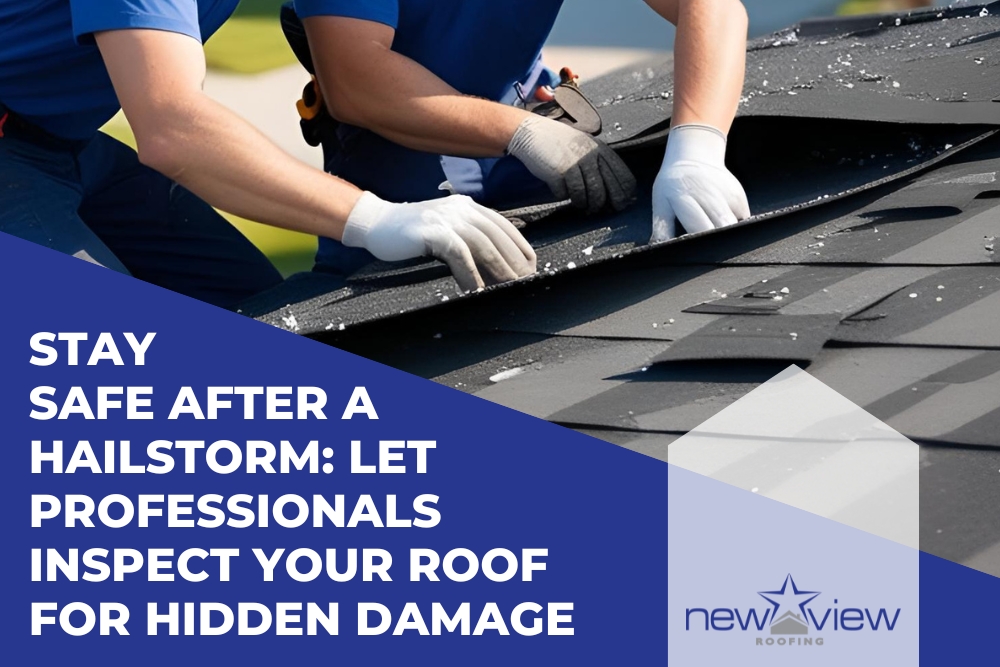
Signs of Roof Hail Damage from a Roof Repair Company
Beyond visible surface damage, hail can affect roofing system components in ways that may worsen over time. Impact points may affect roofing system components and, in some cases, may contribute to water intrusion. Water intrusion may contribute to mold growth, insulation deterioration, or reduced energy efficiency.
Professional inspections use systematic methods to determine whether repairs are sufficient or whether replacement may be recommended as a long-term solution. When evaluating how much hail damage to replace roof systems, inspectors consider damage distribution, roof age, material type, and manufacturer guidelines.
Don’t climb up on your roof after a hailstorm. For safety reasons, it’s best that you keep both feet on the ground. Our roofing professionals can examine your roof using safety gear while taking the proper precautions.
Although we don’t recommend it, if you can get on your roof safely (and the roof isn’t slippery or it has a low enough slope), it may be a good idea to examine your own shingles. However, it is generally recommended to have a roofing professional inspect the roof; we use appropriate safety equipment and inspection procedures.
While you’re checking out your attic, look for signs that the rafters are sagging or that the wood may be rotting; if any of the wood looks or feels soft, you may have moisture-related damage that should be evaluated by a roofing professional. Soft wood may indicate moisture-related deterioration that should be evaluated by a roofing professional.
Not all roof damage after a hailstorm is as obvious as sagging or soft feeling wood.
Here are a few other things to look for after a hailstorm.
Dented metal components – After the high impact of hailstones, certain metal components of a roof, such as gutters, flashing and downspouts, may be left with dents.
You should walk around your home and visually inspect your gutters and downspouts. If there are dents or anything is sagging, bulging or overflowing, get a ladder and have a look. If you prefer to stay safe, call us and we’ll handle it for you. Property owners should consider addressing gutter and downspout problems promptly to help reduce the likelihood of additional maintenance or repair needs.
Bald spots – When hailstones hit a roof, they can dislodge and loosen the ceramic granules that protect asphalt shingles. This will result in noticeable “bald spots” on the roof. The granules will then collect in gutters and downspouts.
Granular loss may affect shingle performance over time. Age is the most common reason that shingle granules come loose from shingles, but there are several other factors that can contribute. Even heavy rain and strong winds can break shingle granules loose, and hail can do the same. Larger hailstones may increase the likelihood of shingle damage. Even a minor impact, if it hits the right way, can knock granules off your roof. Another issue storms can pose is from flying debris or waving tree branches; if branches hit your roof, they can easily scrape shingle granules right off.
In addition to scraping off shingle granules, the debris that flies around during a storm (even a seemingly minor storm) can cause impact damage on your roof, denting shingles, scratching them and lifting them. If you see any debris sitting on your roof, remove it if possible; if not, take some photos that you can share with your roofing inspector. Your roof inspector will remove the debris and examine the whole roof for signs of damage it may have caused.
Fractured shingles – During a storm, hail impacts may result in cracks or other damage to asphalt shingles. When water enters these gaps, it may seep into the underlayment and contribute to roof leaks and may contribute to roof leaks. If you notice any of these signs, it’s important to contact the hail damage restoration specialists at New View Roofing right away. We’ll address identified damage and discuss repair recommendations based on the condition of your roof.
Debris on your roof – Impact damage is serious; if something hits your roof hard enough, it can knock shingles off. At the very least, it can knock your shingle granules loose. Those granules are part of the shingle surface and contribute to overall roof performance, so if they’re missing, roof performance may be reduced compared to its pre-storm condition. So we’ll check each shingle to make sure there are no bald spots. If there’s damage that needs to be repaired, we’ll let you know how quickly it needs to be done and how long the project will take.
Free Roof Inspection
Regular roof maintenance can extend the lifespan of your roof and save money on a premature replacement. As a trusted Dallas roof repair contractor, New View Roofing will give you peace of mind that your home is protected.
How Much Hail Damage Is Needed to Replace a Roof?
Not all hail damage means you need a full roof replacement. Minor dents or a few missing granules can often be repaired. A full roof replacement may be recommended when damage is widespread, shingles are cracked or missing, or the roof may no longer perform as intended against water intrusion and weather exposure.
Insurance providers and roofing professionals typically assess hail damage based on factors such as shingle bruising, granule displacement, exposed matting, and the number of impacted areas per roofing square. When damage reaches certain thresholds, full roof replacement may be recommended rather than spot repairs.

A professional roof inspection is one way to determine the severity of the damage. Acting early may help with documentation and the insurance claims process, and helps maintain the condition of your roofing system.
Asphalt Shingles: Protection from Hail
There are three main types of asphalt shingles: 3-tab, dimensional and luxury. Each has its own distinct appearance, and Each has different performance characteristics. Different shingle types have different performance characteristics in hail and storm conditions. Here’s a quick run-down:
3-tab shingles are the most affordable type, and they’re fairly durable. However, out of all the asphalt shingle types, they may provide the lowest level of hail and storm damage protection for your home. They’re economical because they’re made from layers (sometimes a single layer and sometimes more) of fiberglass base mat coated with mineral granules.
Thicker 3-tab shingles may offer different performance characteristics during hail and wind events against hail and stormy weather. Blow-off can occur when shingles age, are improperly installed, or are exposed to strong winds; that’s what happens when they’re aging or poorly installed and gusts of wind catch them, and the gust rips them away from your roof. A missing shingle may leave underlying roofing materials exposed to weather, so this type of condition should be evaluated promptly.
Dimensional shingles are, price-wise, somewhere between 3-tab shingles and luxury shingles. Often, they are often positioned between 3-tab and luxury shingles in terms of design and performance characteristics, as well. These shingles are also called laminated or architectural shingles, and they feature two layers of shingles bonded together. The bottom layer remains exposed, and, during the manufacturing process, notches are removed from it; that creates a dimensional look that some homeowners love. According to the Asphalt Roofing Manufacturers Association, or ARMA, dimensional shingles are widely used in residential roofing.
This makes sense because they’re both economical and attractive. However, they may not provide substantially different performance characteristics during hail and wind events for your roof during hail storms and wind storms. Like other types of asphalt shingles, they’re subject to impact damage that can knock off granules, as well as wind damage that can cause them to lift up or blow off your roof entirely.
Luxury shingles are the most expensive of the bunch, and when they come from most manufacturers, they often come with enhanced warranty offerings and additional product features, depending on the manufacturer. These shingles are made to look like natural materials, such as cedar or slate, but at a fraction of the cost of the real materials.
They weigh quite a bit more than standard 3-tab shingles do, which means they are generally heavier than standard 3-tab shingles (and less likely to blow off during windy conditions). They may offer increased impact resistance compared with some other asphalt shingle products, such as what occurs during a Texas hail storm. However, because these shingles are heavier (and more expensive) than other types of asphalt shingles, they’re not the perfect choice for every home. We do often recommend these shingles in hail-prone regions like ours, though, because of their construction and impact-resistance characteristics.
In addition to shingle type, impact resistance ratings play a critical role in hail performance. Many modern asphalt shingles are tested and classified under UL 2218 impact resistance standards, with Class 4 shingles offering the highest impact-resistance rating under the UL 2218 standard. These shingles are designed and tested for increased impact resistance under UL 2218 standards, making them a roofing option often considered in hail-prone regions.
Homeowners concerned about how much hail damage is required to replace roof systems should consider upgrading materials during replacement. Some insurance providers may offer premium discounts for certain impact-resistant roofing products, depending on carrier requirements and policy terms, which can offset the higher upfront costs over time.
Professional Hail Damage Roof Repair Services
New View Roofing is a full-service roof restoration company that specializes in roof replacement, roof repair and more. In addition to hail damage, we also address storm and wind damage to residential and commercial roofing properties. We’re dedicated to providing high-quality services that perform repairs or replacement based on the approved project scope.
Our team inspects for signs of damage such as dents, scratches, missing granules, lifted edges, and missing shingles, including dents, scratches, missing granules and lifted edges, as well as missing shingles, so our team will document observed conditions and discuss recommended repair or replacement options based on the inspection findings and and discuss recommended repair or replacement options based on the inspection findings.
How to Submit a Hail Damage Roof Insurance Claim
- Roof Inspection — A New View Roofing project manager will inspect your roof for storm damage.
- File a Claim — If you choose to file an insurance claim, your project manager can help coordinate the inspection process and provide documentation related to the roofing damage.
- Adjuster Meeting — Your insurance company will send an adjuster to inspect the property and evaluate the reported damage. Your New View Roofing manager may attend the inspection and provide documentation regarding observed roof damage. It is our goal to provide documentation regarding observed damage for the adjuster’s review on the insurance claim.
- Review Paperwork and Sign Agreement — Once you receive the insurance paperwork, your project manager will review the paperwork and discuss the items included and provide an agreement of the work to be completed.
- Claim Revision — New View Roofing will review all line items on the Insurance Statement of Loss Paperwork. Throughout the process, may submit supporting documentation and supplemental requests to the insurance carrier for review, when appropriate for repairs needed to provide materials and services consistent with the approved project scope.
- Roof Installation — Your New View Roofing manager will coordinate with you to schedule your new roof installation, and will coordinate the roofing work in accordance with the approved project scope and applicable agreements.
Once the project is scheduled, our team will keep you informed throughout the repair process.
Schedule Your Free Roof Inspection Today!
If your property has suffered hail damage, be sure to address the issues right away before they worsen over time. A member of the New View Roofing team may be available to inspect your property within 24 hours of your request, subject to scheduling and weather conditions and will walk around your roof looking for any signs of hail damage, including bald spots or missing shingles. Request a free inspection today!
